Nigeria’s capital market could serve as a pivot for economic transformation in 2026. This is evident in the emergence of economic powerhouses such as the United States of America and the United Kingdom, which have transformed into capital markets giants and global economic leaders. Nigeria could adopt a similar template and use its capital market to unlock hidden value in industries such as gas, power, rail transportation, and agriculture, according to Dr. Sonnie Ayere, a globally recognized fixed-income market expert and group chief executive officer (GCEO) of the DLM Capital Group.
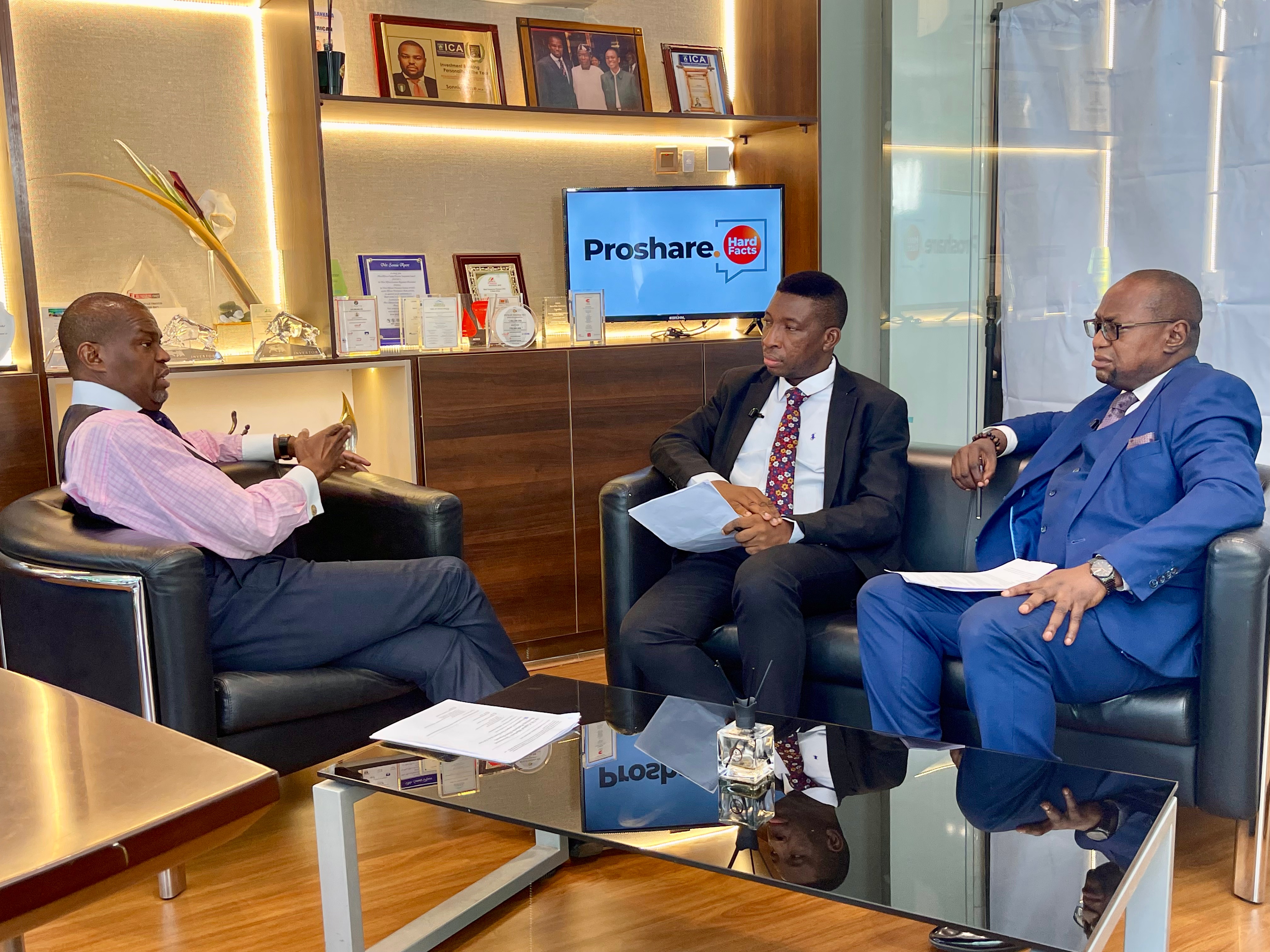
Speaking during the eighth edition of the Proshare Hard Facts programme, Dr Ayere indicated that Nigeria sits on one of the world’s largest proven gas reserves yet complains of inadequate power and infrastructure. He explained that this was an anomaly that needed to be fixed urgently. He suggested that the federal government immediately establish a program-focused team of experts to draw up a roadmap for the exploitation of Nigeria’s massive gas reserves and to design and implement a funding programme that aligns cash flows with gas development projects.
He acknowledged that there would be towering difficulties, but was sure that with clarity, commitment, and capital, the country would create new jobs, generate steady electricity, fast-track manufacturing, and speed dial inclusive development. According to Ayere, ‘We should not be singing songs of lamentation in a promised land filled with tremendous natural mineral endowments, going hungry in a farm filled with yams, pepper, tomato, and cassava is not smart. In fact, it is a travesty.’
According to Ayere, ‘We should and can do better. The problem is not resources, but the willingness to face the difficult with courage, the complex with intelligence, and the unknown with enthusiasm. The likes of Aliko Dangote, Tony Elumelu, Femi Otedola, and Abdurahman Samad have shown that the impossible exists only as a restraining anchor in the minds of those unprepared for legacy.’
The article below captures the restless, innovative mind of Dr. Ayere and his positions on critical economic developments, and how they could unlock the Nigerian capital market as a growth catalyst, wealth creator, and instigator of inclusive growth.
Agriculture- Dangote Fertilizer IPO & Opportunities for Investors
For Dr. Ayere there is so much value that the Dangote Fertilizer Plant Initial Public Offer (IPO) will bring to early investors. He believes valuation is important and that investment in agricultural stocks is long-term, not short-term. For him, investments in agricultural products are a long-term value proposition.
He noted that the Dangote Fertilizer Plant would enable the transition of Nigeria from subsistence to a sophisticated and export-oriented industrial agro-processing hub. Ayere also cited the cases of Okomu and Pressco Oil Palm companies, which have added value for investors in the market.
Energy
The Dangote Petroleum refinery, currently at the 650,000-bpd level and projected to reach 1.4mbpd in the next 3 years, for Dr. Sonnie Ayere, signals the importance of domestic investments and is reminiscent of what happened in the UK after World War II, when Britons made domestic investments to rebuild the UK economy post the destruction from Germany.
“Dangote Petroleum Refinery is an example of pacesetting and succeeding, which has emboldened others to invest in the oil and gas sector,” he added.
He asserts that Dangote Petroleum Refinery has opened the floodgates to investments in the country, and another example is Mr. Tony Elumelu 20.09% stake in Seplat Petroleum Development Company. He also noted the evolution of Aradel Holdings Plc, another interesting energy development to consider.
The market expert also pointed out that Nigeria is not an Oil economy but rather endowed with huge gas reserves that have not been fully tapped.
He said, “The value of Nigeria’s proven gas reserves is $803trn, while the U.S GDP is $32trn. Gas is one commodity Nigeria is sitting on, and it is a huge opportunity for the energy space to experience a remarkable transformation.”
Ayere advocated for a Presidential Think-Tank to develop a pathway for effectively utilising gas reserves for inclusive economic growth.
“The current administration has provided an enabling environment for the oil and gas industry through the PIA. This is building on the work of previous administrations, and the reforms in the downstream petroleum sector have addressed distortions and tackled rent seekers. The NUPRC has not issued any import license in 2026.”
Mergers and Acquisition
On Mergers and acquisitions (M&As), he said the current market favors acquisitions over mergers because of a historically individualistic business culture. This means high-net-worth and ultra-wealthy investors will seek to make more investments in energy, oil, and gas.
He said the biggest investors to watch in Nigeria will be pension managers and asset managers. BlackRock and Vanguard are examples of global asset managers with huge asset sizes.
“It is looking at the buy side, which is asset management, pension, family offices, and then looking at them really having stakes across critical industries and then putting in long-term patient capital as these industries evolve,” he added.
Insurance Repositioning
Looking at insurance and its current position in the country, he attributed the non-compliance culture to a mitigating factor in the industry’s growth and penetration. He stressed the need for enforcement and proposed linking life insurance to a robust mortgage and housing market. According to him, this will unlock growth for the insurance industry. On the other hand, he believed that government intervention through technology-enabled enforcement would deepen growth in the insurance sector.
Capital Market Indexes
Providing insight into capital market indexes, he stated that there was nothing wrong in developing indexes that track the performance of mid-size or other quoted companies. The clause states that if it is to be commercialized or traded, it must be regulated by the Securities and Exchange Commission and the data part by the Nigeria Exchange Limited.
For private indexes regulated by the Securities and Exchange Commission, he said, from a regulator’s perspective, it can be viewed as an avenue for qualified institutional investors to access and verify the quality of analysis and information. He added, “The private index is for qualified institutional investors and not retail investors. It is just like private funds in the market that are restricted to institutional investors.”
Analyzing the Float situation in the market and Proshare’s recent commentary on Nigeria’s Billionaire Exchange, which indicated power concentration amongst Nigeria’s top 1% of investors. He acknowledged that there are very small, concentrated investors in the market and that the indexes are less fluid for investors in Nigeria.
He advocated a review of the law of One Man, One Vote, which discourages Founders from listing on the market for fear of losing control of their companies, and instead proposed a free-float Special Rights/Multi-Vote structure that allows Founders to list 80% of their equity while retaining control.
Infrastructure Financing
In this context, he identified yields as one of the factors hampering infrastructure investment in Nigeria. He cited the example that when an investor can get 20 to 30% yield on OMO or 20% on FGN Treasury bills, it will be very difficult to convince anyone to invest in another portfolio. He acknowledged the huge infrastructure gap in the country, which requires about $ 2.3 trillion to address, and noted that investment banks like Chapel Hill Denham have done a great job of targeting infrastructure financing.
He stressed the need for fiscal incentives to attract investors to infrastructure financing and described Sukuk as an interesting product for infrastructure road development. Ayere also advocated for an integrated infrastructure plan that links the country by road and rail, opening the economy to immense opportunities.
Sub-National, Regional Development & Infrastructure
He emphasized the need for investments in infrastructure such as ports across the country beyond Lagos, rail, and connecting roads/highways between the West, East, and Middle Belt. This will lead to the development of other states and unlock opportunities across the country.
Citing post-harvest losses due to logistics and poor storage facilities, he believed that investments in wet and dry solar storage facilities can help reduce the food inflation component and even lower the prices of foodstuffs.
Pan-Africanism, PAPSS, and Integration
Speaking on Africa as a strategic global gateway and trade hub, he called for efforts to strengthen the Pan African Payment Settlement System, PAPSS, as the current challenge of African Central Banks’ settlements in dollars undermines the capabilities of PAPSS. “I could issue a bond in Nigeria and have it bought by investors all around Africa. Do you know what I have done? I already have 10 times as much money as can come into Nigeria. I can pay in naira today, and the other is receiving in Zambian Kwacha at a cross rate. It takes political will and long-term vision.”
Thoughts on CMO Recapitalization: Remove Caps on Fees
The market leader, speaking on the recapitalization of capital market operators, called for the removal of a cap on the fees for operators, financial advisors, and lawyers, allowing the law of supply and demand to play its role. He argued that the market should allow professionals to charge market-driven rates.

Leave a Reply